Xutra / Blog post
What Is Algo Trading? A Practical Guide for Indian Traders
Algo trading, short for algorithmic trading, means using software to follow a defined set of trading instructions. Those instructions can determine when to enter a position, how much to buy or sell, and when to exit. Instead of deciding every action at the order window, the trader specifies the logic in advance and the system evaluates it against market data.
That definition is less glamorous than the advertising around automation, but it is more useful. An algorithm does not need artificial intelligence or thousands of trades per second. A simple rule that checks a completed price candle and sends an order can qualify as an automated trading workflow. Complexity is not evidence of quality, and automation is not evidence of profitability.
How algo trading works
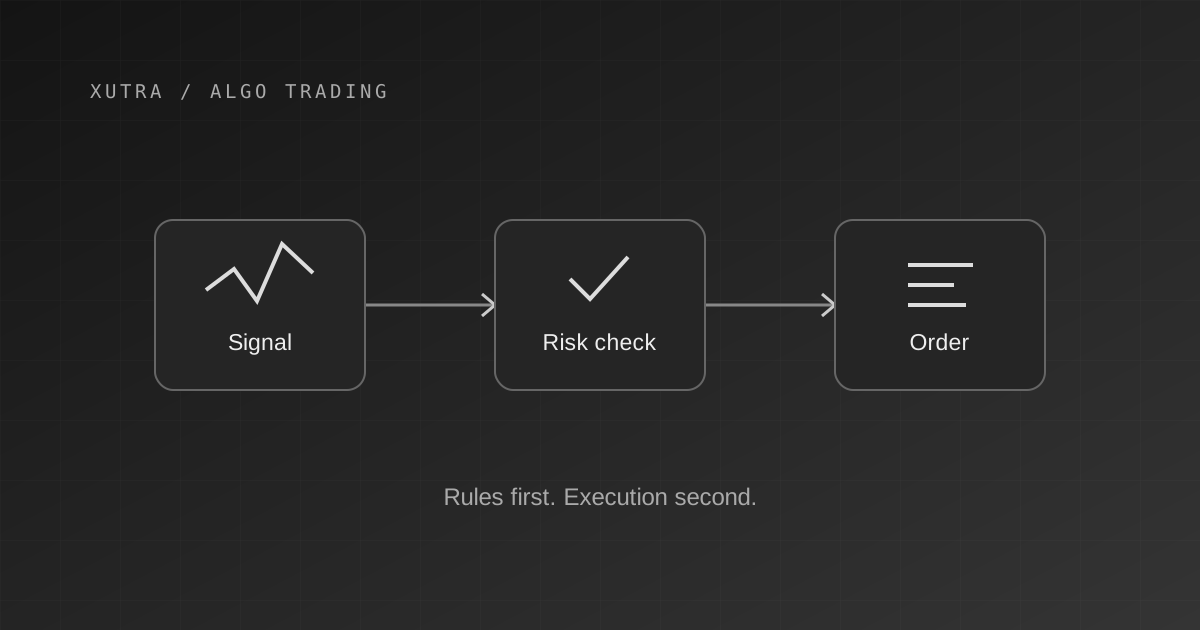
A typical workflow has several distinct steps. Market data arrives, a strategy checks its conditions, risk checks decide whether an order is allowed, and an execution layer sends the instruction through a broker. The system then needs to track what happened. A signal, an accepted order, and a completed trade are three different events.
For example, a hypothetical strategy might look for a price closing above a defined level after a specified time. It could allow only one open position and stop taking new entries after a daily loss threshold. The important work is defining every condition precisely. Does the signal use the last traded price or the close of a completed candle? Can it trigger twice? What happens if the data connection drops?
Broker responses deserve particular attention. Zerodha's Kite Connect documentation explains that successful order placement does not mean successful execution. An order may still be pending, rejected, or only partly filled. An automated strategy has to respond to the actual order state rather than assuming that pressing the electronic equivalent of Buy created the intended position.
Source: Kite Connect documentation on order placement and execution
Algo trading versus manual trading
In manual trading, a person evaluates a setup and submits the order. In algo trading, software performs some or all of those steps using predefined instructions. Many traders use a combination: software monitors conditions while the trader confirms execution, or a trader opens a position and automation manages a specific exit rule.
Neither approach removes uncertainty. Manual trading can accommodate information that is difficult to encode, but it can also introduce inconsistent decisions. Automation can apply the same rule repeatedly, but it will repeat a flawed rule just as reliably. The relevant question is whether a process is clear enough to test, monitor, and correct.
The benefits are operational, not guaranteed returns
A well-designed automated workflow can reduce repetitive monitoring and make decisions easier to audit. It can record the condition that triggered an order and apply a consistent sizing rule. Those are practical advantages for someone managing several instruments or connected accounts. They should not be confused with an assurance that the underlying strategy has an edge.
Costs still apply. Brokerage, applicable charges, bid-ask spreads, and slippage can change the outcome of a strategy that looks attractive before execution costs. A system that trades frequently can be especially sensitive to small differences between its assumed price and the price actually available.
What should you test before going live?
- Define entries, exits, position size, trading hours, and the conditions that stop new orders.
- Test with historical data that matches the instruments and timeframes the strategy actually uses.
- Separate strategy logic from execution handling, including rejections, partial fills, and duplicate signals.
- Observe the workflow in simulation or paper trading before considering limited live exposure.
- Check your broker's current API permissions and applicable exchange requirements before enabling automated execution.
A historical backtest is a useful filter, not a certificate. It can reveal mistakes and periods of weak performance, but it cannot reproduce every live-market condition. A strategy should also have a clear response to missing prices, an expired session, and an order whose status cannot immediately be confirmed. In those situations, uncertainty itself may be a reason to stop new entries.
Where Xutra fits
Xutra brings manual trading and strategy automation into a shared multi-broker workspace. The practical aim is to keep strategy decisions, connected accounts, and position monitoring in the same workflow. That does not change the trader's responsibility to understand the rules, verify broker support, and review what the system is doing.
If you are new to algo trading, start by writing one trading idea in plain language. Then try to remove every ambiguous word. If another person cannot follow the instructions without asking what you meant, the software cannot reliably fill in the gaps either. A clear process is a better starting point than a complicated indicator stack.
Education only · Not investment advice